
- Subject to change at any time!
- Deposits are not required. Reserve early as these sell out fast!
- If you want something special that is not on the list we will do our best to get it.
- All layer breeds are ordered as pullets (female). Sexing is about 90% accurate. You may request roosters. Meat chickens, turkeys, game birds, water fowl, and bantams are straight run (unsexed).
- For specific breed information see Ideal Hatchery, Hoover Hatchery, or Freedom Ranger Hatchery
- 4-H JML Turkeys must be hatched after February 6th and in possession by March 20th. 4-H JML Chickens must be hatched after April 15th and in possession by June 1st.
- CHICKEN PLUCKERS are available for rent, along with scalders and restraining cones. Check out our free Processing Poultry instructions.
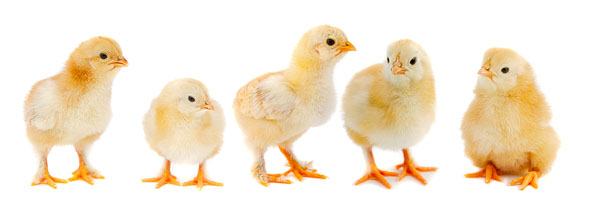
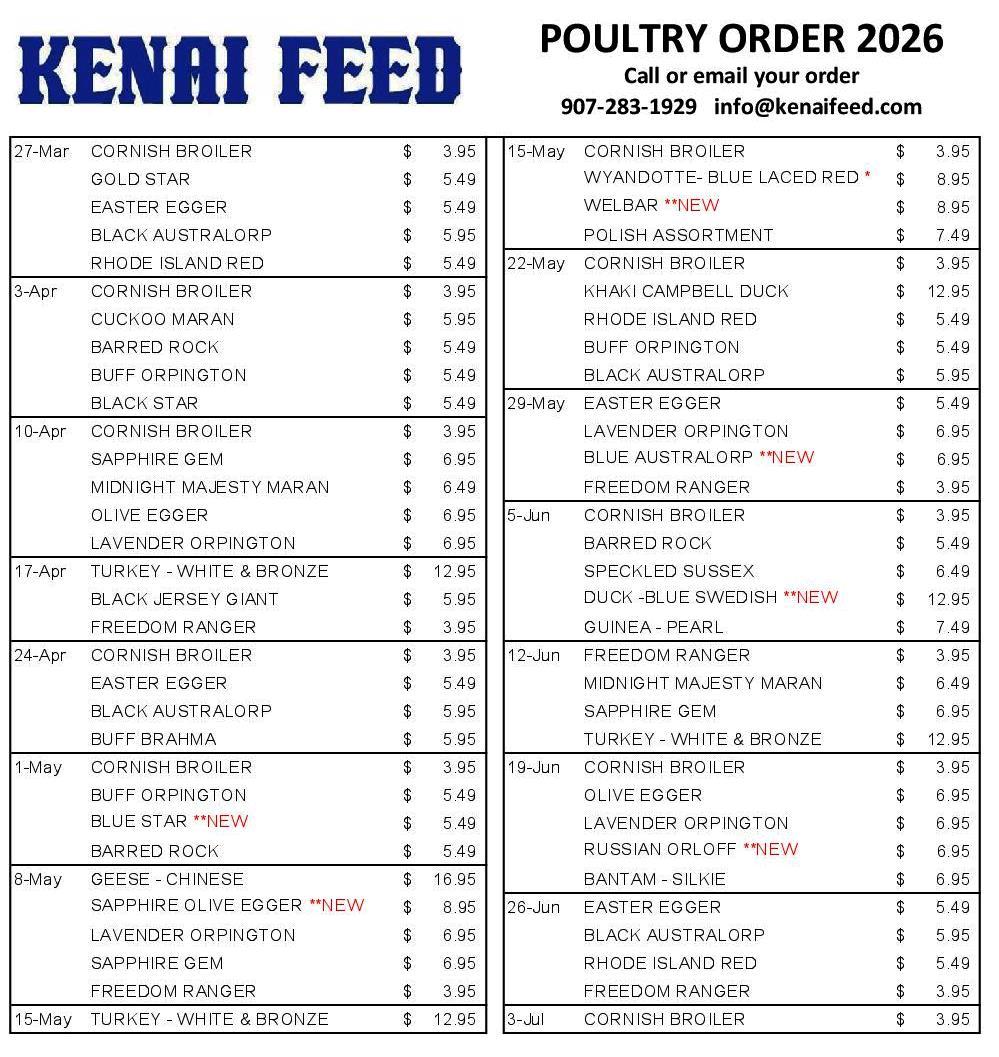
Kenai Feed - Poultry Breeds
Check back in January for our 2026 chick schedule!
Discover our wide selection of poultry breeds, perfect for backyard flocks or small homesteads. Each breed offers its own unique combination of temperament, egg production, and hardiness suited for Alaskan conditions. Varieties and availability are subject to change.
- Bantams Silkie/Russian Orloff: Small, friendly birds known for their fluffy plumage and gentle nature. Great pets and ornamental additions.
- Barred Rock: Classic dual-purpose breed with calm temperament and steady brown egg production.
- Black Australorp: A prolific layer of large brown eggs and known for their docile and hardy nature.
- Black Star: Hybrid known for early and reliable laying of large brown eggs. Friendly and low-maintenance.
- Blue Star: Attractive blue-feathered hybrid layer that produces large brown eggs and is easy to raise.
- Blue Swedish Duck (SR): Medium-sized, calm duck known for its striking blue plumage and excellent foraging ability.
- Brahma Assortment: Gentle giants with feathered feet and calm personalities. Great winter layers.
- Buff Orpington: Golden, gentle, and dependable. Excellent layers and wonderful with families.
- Cornish: Muscular meat bird valued for its rich flavor and efficient growth rate.
- Easter Egger: Fun, friendly hens that lay a rainbow of egg colors from blue to green to pink.
- Freedom Ranger: Excellent pasture-raised meat bird that grows steadily and yields flavorful meat.
- Gold Star: Reliable hybrid layer producing large brown eggs with a friendly temperament.
- Goose - Brown / White Chinese: Graceful, alert, and great for weeding. Hardy and adaptable to various climates.
- Guineas (Pearl): Excellent tick and pest control birds with unique spotted plumage and loud alerts.
- Khaki Campbell Duck: One of the best egg-laying ducks, producing up to 300 eggs a year. Active and hardy.
- Lavender Orpington: Beautiful pale lavender feathers with a calm nature and steady laying ability.
- Midnight Majesty Maran: Dark brown egg layer with a striking plumage and gentle disposition.
- Mystic Onyx: Rare and beautiful dark-feathered bird that lays brown eggs and thrives in mixed flocks.
- Olive Egger: Hybrid layer producing unique olive-green eggs. Hardy and friendly personality.
- Pheasants: Colorful, ornamental game birds prized for their beauty and adaptability to aviary settings.
- Polish Assortment: Whimsical crested birds with charming looks and a curious temperament.
- Rhode Island Red: Hardy, dependable layer of large brown eggs and excellent for all-purpose flocks.
- Sapphire Gem: Attractive lavender-blue hybrid known for high productivity and easy handling.
- Sussex: Docile, dual-purpose breed with good egg production and beautiful feather patterns.
- Turkey Bronze: Traditional meat bird with beautiful bronze plumage and excellent growth rate.
- Turkey White: Classic choice for holiday birds—fast-growing, tender, easy to raise.
- Welbar: Autosexing breed that lays rich brown eggs and is known for its calm and friendly nature.
Winter Care of Chickens
Feed intake varies with season, temperature, age, size, rate of lay, and a ration’s energy density. Cold weather increases a bird's energy requirements-- in cold weather, chickens eat more to obtain additional energy to stay warm. Feed a small amount of scratch grain in to kindle body warmth, and feed a good quality 16% protein layer ration.
- Chocolate
- Apple Seeds
- Pits from peaches, cherries, apricots, nectarines, & pears. The fleshy part is ok.
- Avocado
- Onions
- Tomato plant, including leaves and the stem. The fruit is fine if it is ripe.
- Raw beans
- Potato plant and uncooked potatoes
A chicken’s body contains more than 50% water. An egg is 65% water. Egg production will be maintained if they have plenty of warm water to drink (ideal water temperature is 50-55F). The average chicken drinks between 1 to 2 cups of water per day. A heated poultry fount base is an efficient way to keep water from freezing.
Apply damp, warm cloth to unfreeze. DO NOT RUB. Apply antiseptic ointment. Keep away from other birds until healed. Frostbitten combs once thawed are red, hot, and swollen. They may peel, get scabby or turn black.
- Provide adequate space for the number of birds
- 1 nest box for every 3 - 4 hens
- 3’ of floor space for every mature chicken
- 12” of elevated roost space per bird
- Well ventilated
- Protected from the wind
- Keeps out predatory animals
- Easy to clean
- Situated where drainage is good
- Bedding is several inches deep using straw, pine, or white shavings. (No
cedar) - Keep feeding and water areas clean
Chickens don’t require heat to be healthy. Consistent temperature (40F at roost height) will help maintain egg production. South facing windows or doorways will help to provide natural light. If your birds go outside regularly, continue that routine as it gets colder to help them adjust.
In a small coop, a well placed white incandescent light bulb should supply sufficient. Supplement daylight hours with 14-16 hours of light to maintain egg production. Use a timer! Red heat lights can provide supplemental heat and reduce stress.